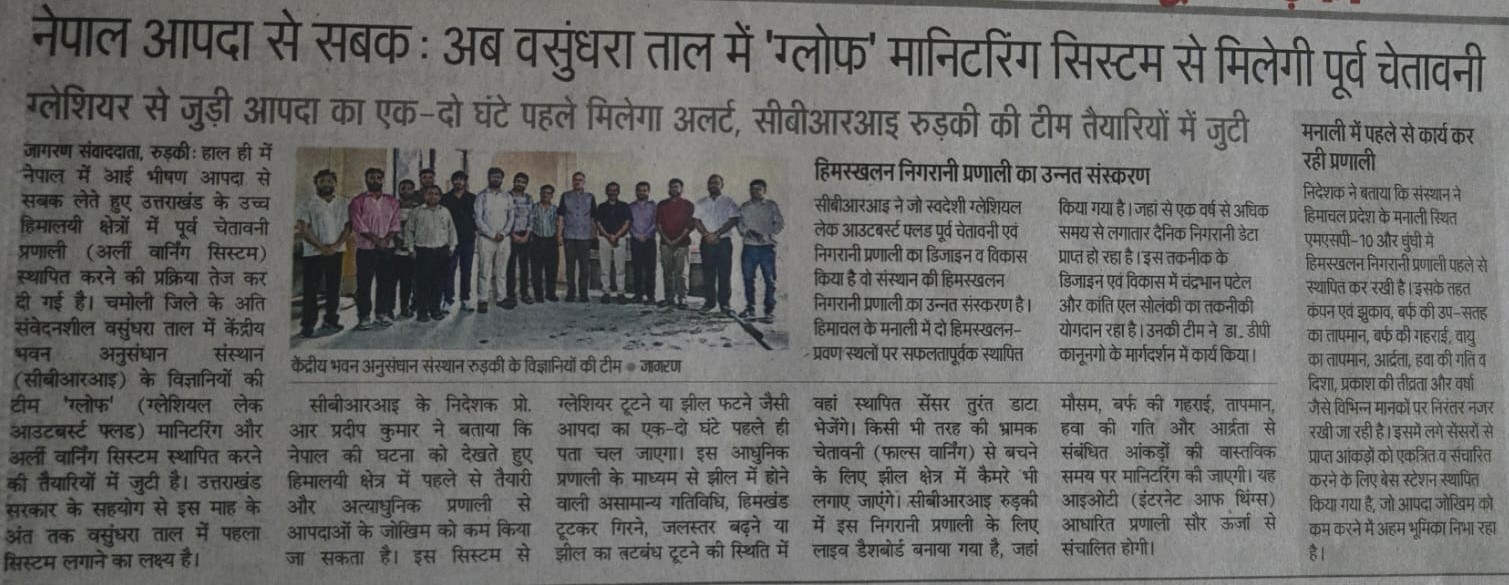

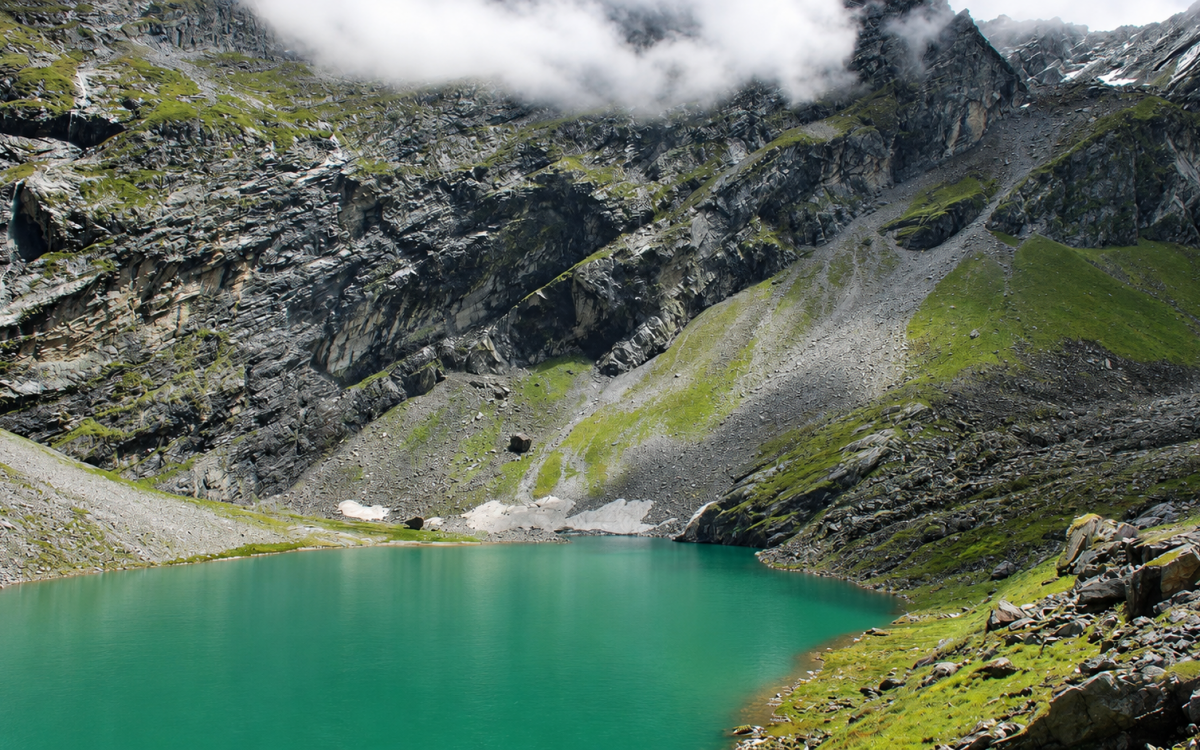
Implementation of a Glacial Lake Outburst Flood (GLOF) Early Warning System at Vasundhara Tal, Uttarakhand
1. Background
Glacial Lake Outburst Floods (GLOFs) are among the major natural hazards affecting high-altitude Himalayan regions. These floods occur when water stored in glacial lakes is suddenly released due to the failure of natural barriers, ice avalanches, landslides, or other geological disturbances.
The devastating disaster in Nepal highlighted the importance of establishing advanced monitoring and early warning systems in vulnerable Himalayan regions.
In response, the Central Building Research Institute (CBRI), Roorkee, initiated preparations to install an advanced Glacial Lake Outburst Flood monitoring and early warning system at Vasundhara Tal in Chamoli district, Uttarakhand.
2. Project Objectives
The primary objectives of the project are:
Establish an advanced GLOF monitoring system at Vasundhara Tal.
Provide early warnings approximately 1–2 hours before a potential glacial lake disaster.
Continuously monitor changes in water levels and surrounding environmental conditions.
Detect abnormal activities such as ice avalanches, rising water levels, and possible lake barrier failures.
Reduce disaster risks and improve preparedness for vulnerable Himalayan communities.
3. Parameters Monitored
The system will continuously monitor:
Weather conditions
Snow depth
Temperature
Wind speed and direction
Humidity
Solar radiation intensity
Changes in glacial lake conditions
Abnormal environmental activities
4. Expected Working Mechanism
Sensors installed around the glacial lake continuously collect environmental and lake-related information.
Sensor readings are transmitted to the monitoring system.
The system analyses incoming data to identify abnormal changes.
Cameras provide visual verification to help reduce false alarms.
If dangerous conditions are detected, an early warning can be generated.
The system aims to provide approximately 1–2 hours of advance warning before a potential disaster.
5. Expected Outcomes
Improved disaster preparedness in the Himalayan region.
Early detection of potential glacial lake hazards.
Reduced risk to human life and infrastructure.
Better environmental monitoring.
Improved disaster management and emergency response.
6. Project Status (As Reported in September 2026)
According to the newspaper report, CBRI was actively preparing to install the first monitoring system at Vasundhara Tal by the end of September 2026, with support from the Uttarakhand Government.
Note: The article reports the installation plan and preparations; it does not confirm the final commissioning of the Vasundhara Tal system.